


O’Mutfak Fast Food Restaurant
Restaurant


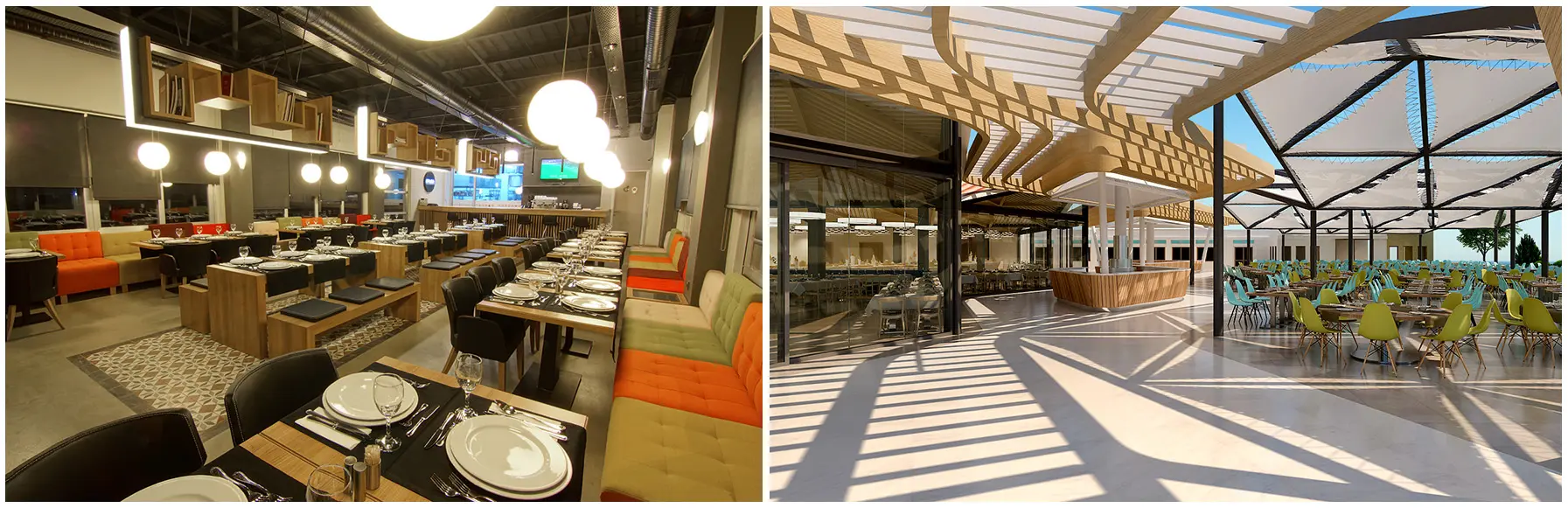
Restaurant interior design and implementation today go beyond creating an aesthetically pleasing environment; they represent a strategic process that transforms a brand’s identity, culinary philosophy, and target audience into a spatial experience. Through restaurant and café designs, a brand perception is crafted in which atmosphere is as influential as the culinary offerings. Successful restaurant interiors deliver a deliberate and cohesive narrative from the moment a guest steps into the space, turning the environment into a silent yet powerful storyteller of the brand’s story.
Not every restaurant can be approached with the same design strategy. Fine dining establishments, boutique cafés, gastronomy-focused concepts, and high-traffic social spaces each host distinct user profiles and experience expectations. Therefore, the restaurant interior design process must be customized in alignment with the establishment’s concept, kitchen infrastructure, and brand language.
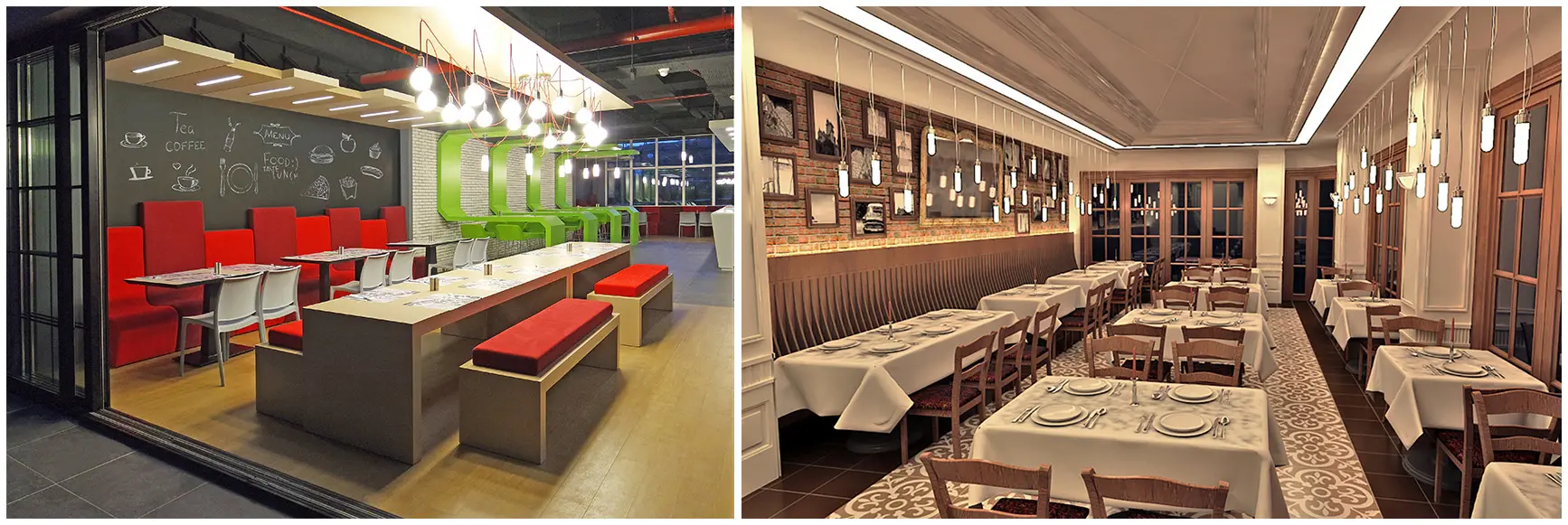
Analysis and Concept Development: The restaurant interior design process begins with an analysis of the brand identity, target customer profile, and service model. At this stage, the story of the space is translated into a coherent design language.
Spatial Planning: Seating layout, circulation, kitchen–service relationships, and acoustic balance are among the most critical elements of restaurant interior design. A comfortable and seamless experience is achieved through precise spatial planning.
Materials and Atmosphere: Material selections are made not only for aesthetics but also considering durability, ease of maintenance, and hygiene standards. Lighting plays a fundamental role in defining the atmosphere and overall guest experience within the restaurant.
Restaurant implementation process requires the precise and complete execution of the design. Technical drawings, kitchen infrastructure, and mechanical and electrical systems are carefully addressed at this stage. Implementation and on-site management, conducted by expert teams, ensure high-quality workmanship and effective time management. The quality of execution in restaurant and café projects has a direct impact on brand perception.
Through professional restaurant interior design and implementation, a brand-specific atmosphere is created while operational efficiency and the customer experience are enhanced. A well-designed restaurant is not only an aesthetically pleasing space but also a sustainable brand investment. When approached with a visionary perspective, restaurant interior design and implementation become a powerful tool that transforms the space into a competitive advantage.


